
Why Driveway Repair Is Often the Best First Step Before Resurfacing
Most homeowners do not start by asking for resurfacing.
They start by noticing the driveway is not aging well. A few cracks keep spreading. An old patch looks rough. A pothole shows up near the garage. The surface still works, but it does not look clean or solid anymore.
That is usually the point where resurfacing sounds like the obvious answer.
And sometimes it is.
But in a lot of real driveways, the best first move is repair.
We see that all the time across Northern Virginia. If the trouble spots are left alone and a new surface goes right over them, the driveway may look better for a while, but the old, weak areas can still affect the result.
That is why we often pair driveway repair with driveway resurfacing instead of treating them like completely separate conversations.
Resurfacing Works Best When the Surface Under It Is Ready
A new top layer is only as good as the surface under it.
If the driveway already has open cracks, broken patch areas, shallow dips, potholes, or weak spots near the edges, those issues do not stop mattering just because fresh asphalt goes on top. In many cases, they need to be corrected first, so the resurfacing has a better surface to sit on.
That is where a lot of disappointment comes from.
A homeowner pays for a fresh finish, but the driveway underneath was never really prepared for it. The result may look better on day one, but it does not always wear the way it should.
That is one reason our resurfacing work is tied so closely to driveway contractor services.
What Repair Usually Handles Before Resurfacing Starts
Repair work before resurfacing is not about adding extra steps to make the project bigger.
It is about fixing the areas most likely to shorten the life of the resurfacing job.
That usually includes:
- spreading cracks
- potholes
- rough patch areas
- shallow low spots
- broken edges
- damaged sections near the garage or apron
- surface trouble that keeps collecting water
On our asphalt driveway repair page, we cover the kinds of work that often come before resurfacing, including crack repair, pothole patching, saw-cut repairs, and deeper dig-outs when a section is too far gone for a simple patch.
Not every driveway needs all of that. But many driveways need at least some of it before resurfacing makes real sense.
Why Driveway Repair First Usually Leads to a Better Resurfacing Job
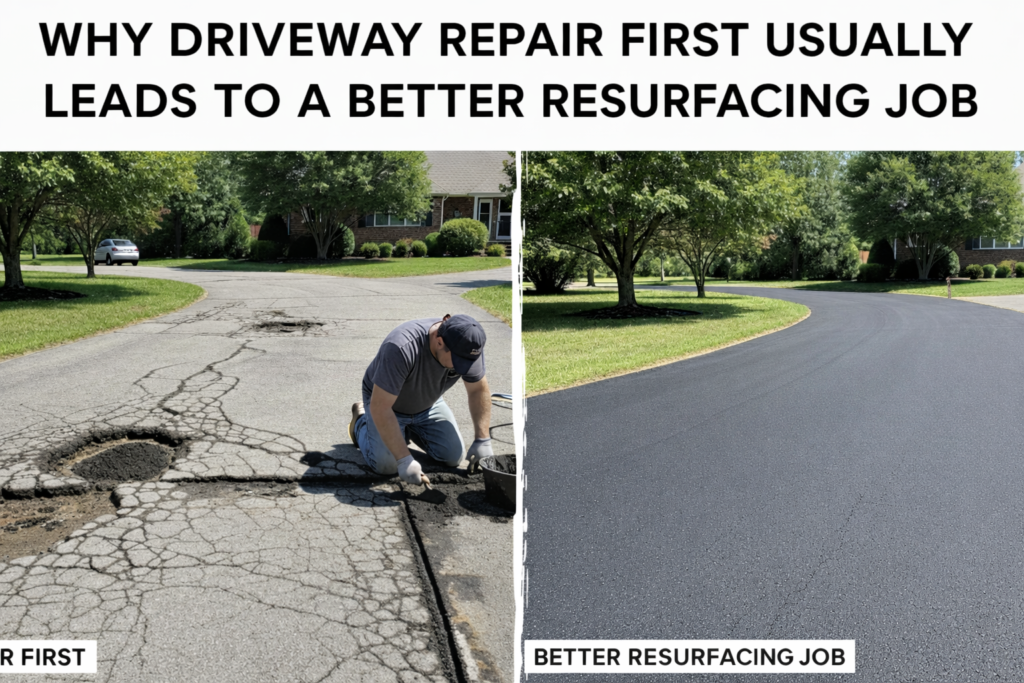
When the damaged spots are repaired first, the resurfacing usually comes out smoother, cleaner, and more reliable. The new layer is not trying to cover active trouble. It is going over a surface that has already been corrected where it needed help.
That usually means:
- a more even finish
- fewer visible weak spots
- better-looking results
- less chance of early trouble in the worst areas
- more value from the resurfacing project
In simple terms, repair gives resurfacing a better chance to do its job.
The Driveway Problems That Should Usually Be Repaired First
Not every older driveway needs the same prep.
But these are the issues we usually take seriously before resurfacing:
Cracks that are clearly growing
Hairline surface cracks are one thing. Wider cracks or crack patterns that keep spreading are another.
Potholes and broken patches
A new top layer should not be expected to solve active holes or broken sections on its own.
Low spots that keep holding water
If the driveway is already trapping water, that should be corrected before resurfacing.
Rough areas near the garage
These are high-stress spots. If they are already broken down, they often need repair before anything else.
Weak edges
The edges are often the first part of the driveway to show wear. If they are crumbling or breaking apart, resurfacing alone usually is not enough there.
This is why it helps to compare the condition of the driveway with both driveway repair and asphalt care.
When Repair Plus Resurfacing Makes More Sense Than Full Replacement
This is where a lot of homeowners actually are.
The driveway is too worn for another round of small patches to feel worthwhile, but it is not so far gone that full replacement is automatically the best answer.
That is usually where repair plus resurfacing makes sense.
It often works well when:
- The driveway still feels mostly solid
- The biggest trouble is limited to certain areas
- The surface looks old and worn, but the structure still seems worth saving
- The owner wants more life from the driveway without tearing out everything yet
In that situation, fixing the worst areas first and then resurfacing the full driveway can give a better balance of cost, appearance, and longevity.
That is why some homeowners who first think they need driveway paving end up in a different place after inspection.
When Repair Before Resurfacing Still Is Not Enough
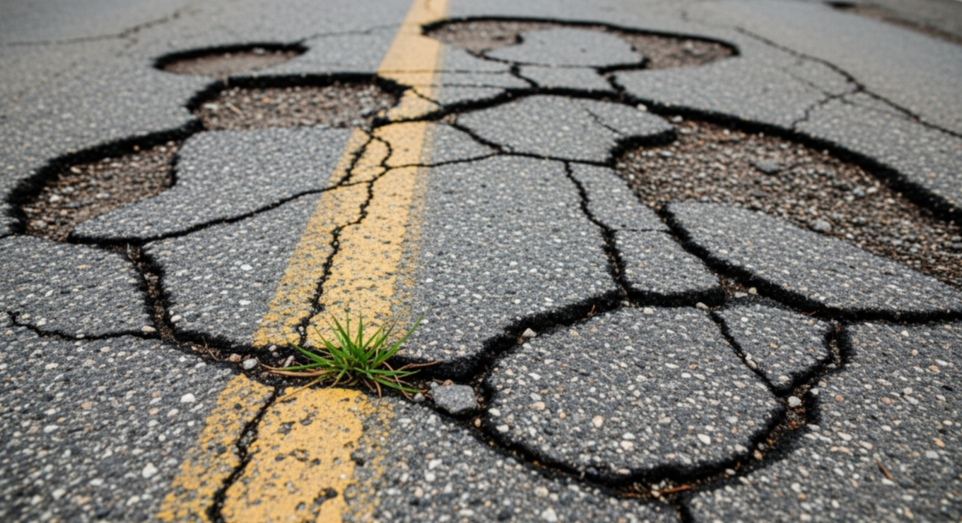
There are also times when repair plus resurfacing is not the right answer.
If the driveway has major sinking, severe alligator cracking, soft spots, repeated widespread failure, or serious drainage-related movement, the real problem is deeper than surface wear.
In those cases, a new layer on top will not solve enough. It may improve the look for a while, but it does not change the fact that the support below is failing.
That is why we always try to separate surface damage from structural failure.
What We Look At Before Recommending the Next Step
We do not walk up to a driveway and assume the answer in the first minute.
We look at the pattern of the damage first.
That usually means checking:
- crack patterns
- patch history
- pothole areas
- edge condition
- low spots
- drainage behavior
- whether the driveway still feels stable overall
- whether the damage is local or widespread
Then we decide what actually fits.
Sometimes the answer is repair only and sometimes it is repaired first, then resurfaced. Sometimes the driveway has moved past that point and needs a different plan.
That practical thinking runs through our services, our page on choosing a paving contractor, and our FAQ’s.
Why Waiting Usually Makes the Decision Harder
A lot of homeowners wait because the driveway still feels usable.
That is understandable. But waiting often narrows the options.
When small cracks spread, potholes deepen, and low areas keep taking water, the chance to save the driveway with a smarter repair-and-resurfacing plan can start getting smaller. The earlier the weak spots are corrected, the better the resurfacing usually performs later.
The Smarter Way to Get More Life Out of an Aging Driveway
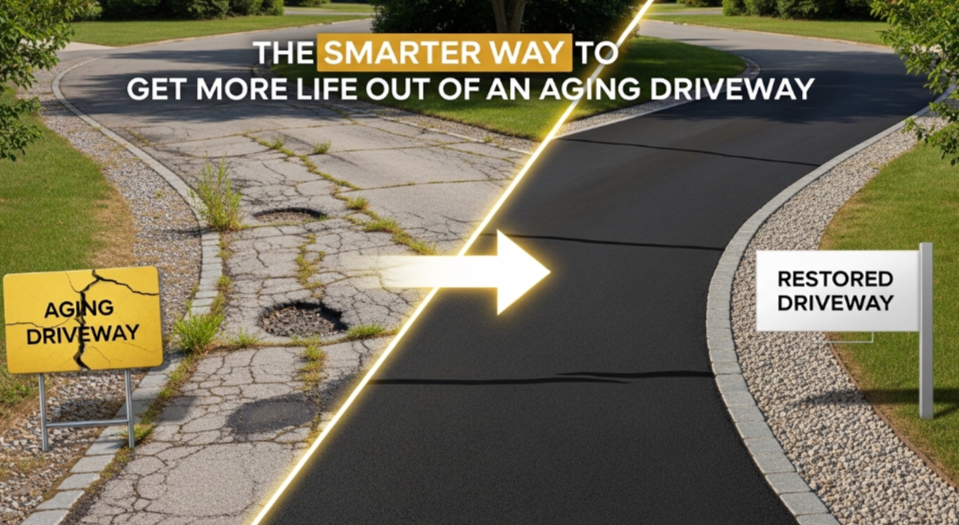
If resurfacing is already on your mind, do not stop at the question of whether the driveway needs a new top layer.
Ask this first:
What needs to be fixed before that new surface goes down?
A lot of the time, that question leads to the smarter answer.
Repair first. Then resurface if the driveway is still a good candidate.
That order usually gives the driveway a better chance to look better and last longer.
If your driveway is in that in-between stage, where it clearly needs help but may not need a full rebuild yet, take a look at our services, browse recent projects at A-Pak.
We help homeowners across Northern Virginia figure out whether repair should come first, whether resurfacing is still the right fit, and when the driveway has moved past that stage.
That way, you are not just paying for the next step.
You are paying for the right one.
.svg)
